|
Throughout
this tutorial I touch on certain, you could
say, philosophical points. When it comes to
the technical approach of the Dub production
process, I cannot point out enough that
we're talking about creating an
"undubbed" Reggae track as a first
phase. After all, Dub is a Reggae remix
process. That's exactly the reason why it
took thirty chapters of basic Reggae
Musicology and Studio Set Up before even one
Dub could be made.
Don't think
everything is said and done about Dub
mixing. It's just, how should I put it, an
introduction. Basic Reggae Musicology and
setting up your studio for a Dub mix is an
introduction. Until this point, namely,
we've only used MIDI technology for the
creation of music and for that, you need to
have a little bit of insight and also a
little bit of musical feel. In fact, for the
creation of the musical track I used zero
knowledge about Dub and every knowledge I
have gained as, well, musician.
I know a
little bit about chords, bass lines and
drums and a little bit about themes and
clavinets and thing. I've worked with
musicians and I always listen to music with
an analytical approach. Still, being a
producer or a Dub engineer is not the same
as being a musician. There's a huge
difference as everybody with even a grain of
insight into the Music Making culture can
tell you. Nuff said.
An engineer
in a studio, especially in pre-computer
days, dealt with recordings. Actual
recordings from actual musicians, not
synthesizers, samplers and drum computers
following a programmed sequencer pattern. An
engineer deals with the vibe of the music,
too, not so much with the actual musicological
side. To an engineer it doesn't matter which
chords, bass lines or whatever is used. The
engineer "just" turns the musical
play into something audible. In our case,
that audible something is Dub.
Next to
programming/playing MIDI stuff into a
sequencer, you can choose to use the
sequencer for pre-recorded material too.
Next to, or instead of. There are basically
three different forms of audio that you can
use to construct your basic (instrumental)
Reggae track: loops, stems and one-shots.
All these three forms deserve their own
chapter, but what they have in common with
each other is the same as what they have in
common with what we have been doing in this
tutorial thus far: creating a track from
where we can make a Dub of.
Here's a
short description of the three audio forms
I'd like to cover:
ONE
SHOTS
The most
common use of one shots are drum samples in
a drum computer or sampler. Load the
one-shots, program a rhythm and off you go.
They can also be used to spice up things
musically or as a plain sound effect while
you mix your Dub.
LOOPS
Loops are
shorter or longer recordings of drums, bass,
horns, the riddim section. They can be one
bar, two, four, eight, up to thirty-two and
even beyond. Using Loop Player and Editor
features, you can change the rhythm and
pitch of the loops to make a workable
multi-track of a Reggae track.
STEMS
Stems are
like loops, but they can be complete
multi-track recordings from start to stop,
including vocals and others as well. Stems
can actually be seen as what used to be the
multi-track recordings in studios like
Channel one.
The big
difference between creating your own musical
track and using pre-recorded material lies
in the contents of the audio, obviously.
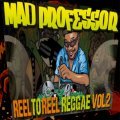
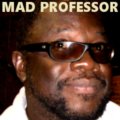
Personally I use loops that were recorded in
Mad Professor's studio, for example. Drums,
horns, riddim section... I combine it with
my own musical ideas but it is a great joy,
help and improvement for my sound that I'm
able to use material recorded with not just
crucial soundware but also with the
experience of Mad Professor and the
musicians themselves. I use much more than
Ariwa material, but I'm sure you get the
point.
When I
started writing this tutorial back in the
days, even using one-shots was quite a
thing. Processing loops was like: give a
command to your computer, take a trip around
town and see if it was anything when you
came back. Fortunately, processing audio can
be done in real-time so even without any
musicological background but with just an
ear for the right thing,
"everybody" can now make Dub. Even
when they didn't make (all) of the music
themselves.
|